

Who to mail when you’re mailing non-customers
- Target middle-aged to older homes with moderate-to-high value ($300k-$800k), owner-occupied rather than rented. Older homes are more likely to need a breakdown repair or a new install, which is exactly the job these mailers are selling.
- The offer has to be genuinely enticing. A coupon that would move an existing customer will not move a stranger. Lead with the strongest discount or incentive your business can support.
Automated radius trigger
Why it works: Homes in the same neighborhood are usually built around the same time, so their equipment ages on a similar timeline. If one home just needed a new AC system, the neighbors’ systems are probably close behind it, which makes this one of the highest-intent radius audiences available, far better than a generic geographic blast. When to mail: Anchor the campaign on a single high-value install or replacement. The anchor audience can be small, single digits is fine. Mail the immediate neighbors of that address, with messaging that names the anchor job directly, not a generic “we were in your area” line. In Avoca, use Radius Blast.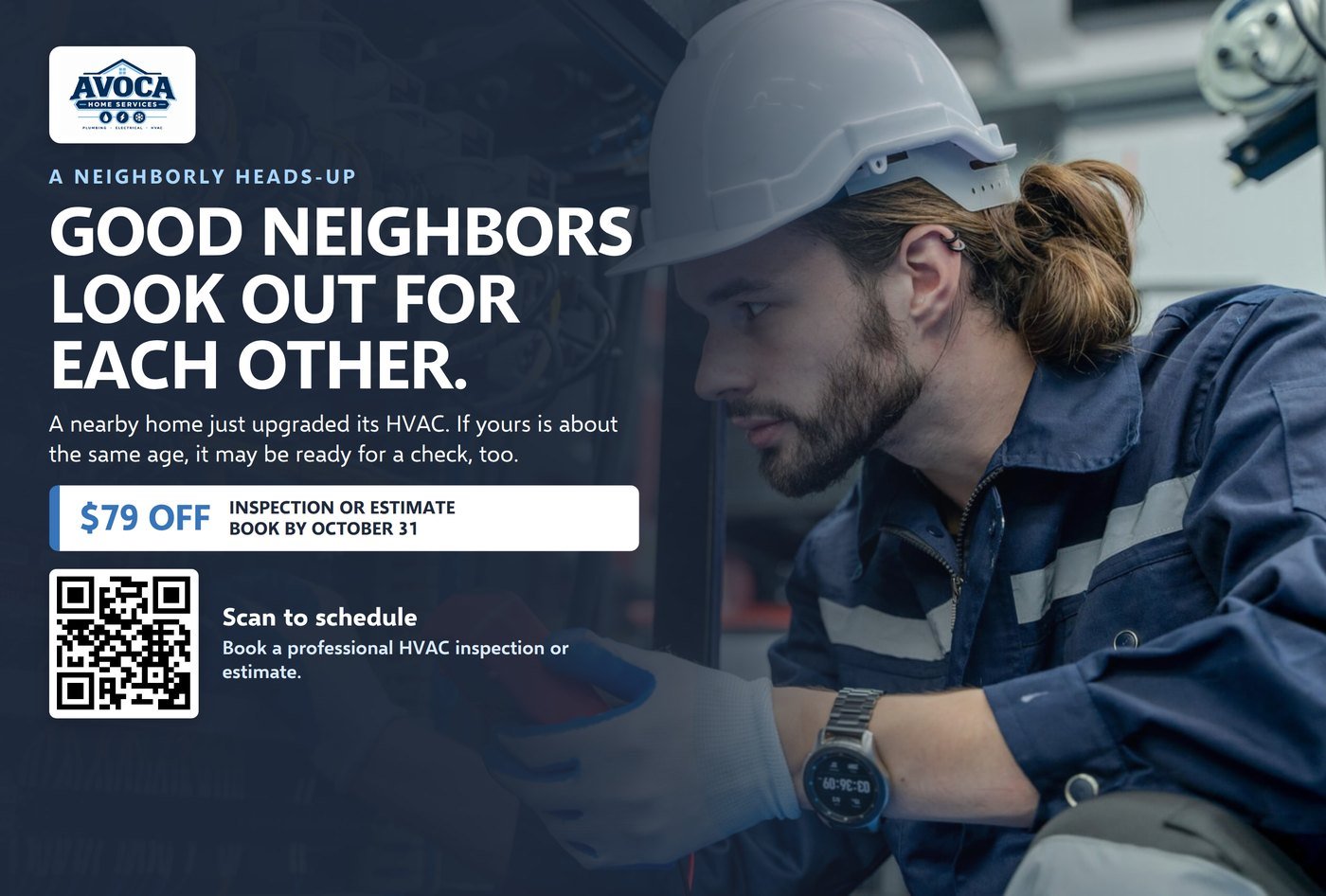
Front
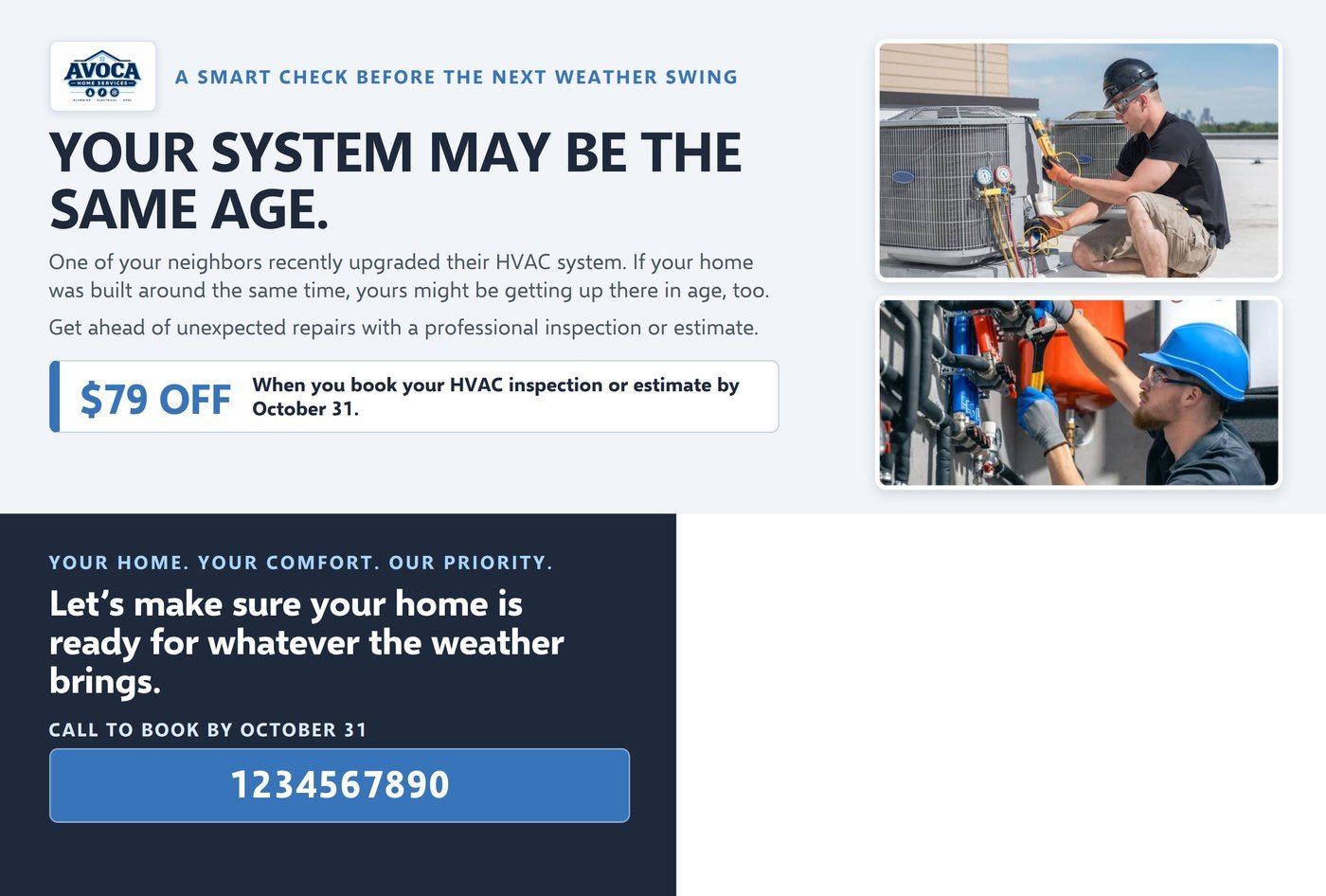
Back
- Offer: $[X] off an inspection or estimate, book by [date] (2-3 weeks out)
- Seasonal hook: lean on the “neighborhood equipment ages together” logic directly; add a seasonal angle only if the anchor install is a seasonal system (AC, furnace)
- Audience: Neighbors of a single high-value install. The anchor audience can be single digits. Use a small radius so you only mail the immediate neighbors of that address, not a wide area.
- Front/back split: front hero’s direct neighbor messaging (“A home near you just had a new [equipment] installed, here’s why that matters for yours too”); back explains the “homes built together age together” logic and the offer
- Styling: hyperlocal, name the street or immediate area, use a real photo of the anchor install if approved, not stock imagery
- Tone: neighborly, informative, not a hard sell
- Sequence: set it to run on a schedule so every qualifying install is picked up, and send 3-6 touches to each neighbor over several weeks
- CTA: call [phone] or scan QR code to book an estimate
New mover welcome
Why it works: New homeowners are actively building their list of trusted vendors and usually don’t have one yet for HVAC, plumbing, or electrical, so there’s no entrenched competitor to unseat. Reaching them early, while those habits are still forming, means the company becomes their default choice instead of whoever they find later in a moment of panic. When to mail: Mail within 30-60 days of move-in with a low-friction booking offer. Treat this like a new-prospect sequence, 3-6 touches, since a single welcome card is easy to miss during a move.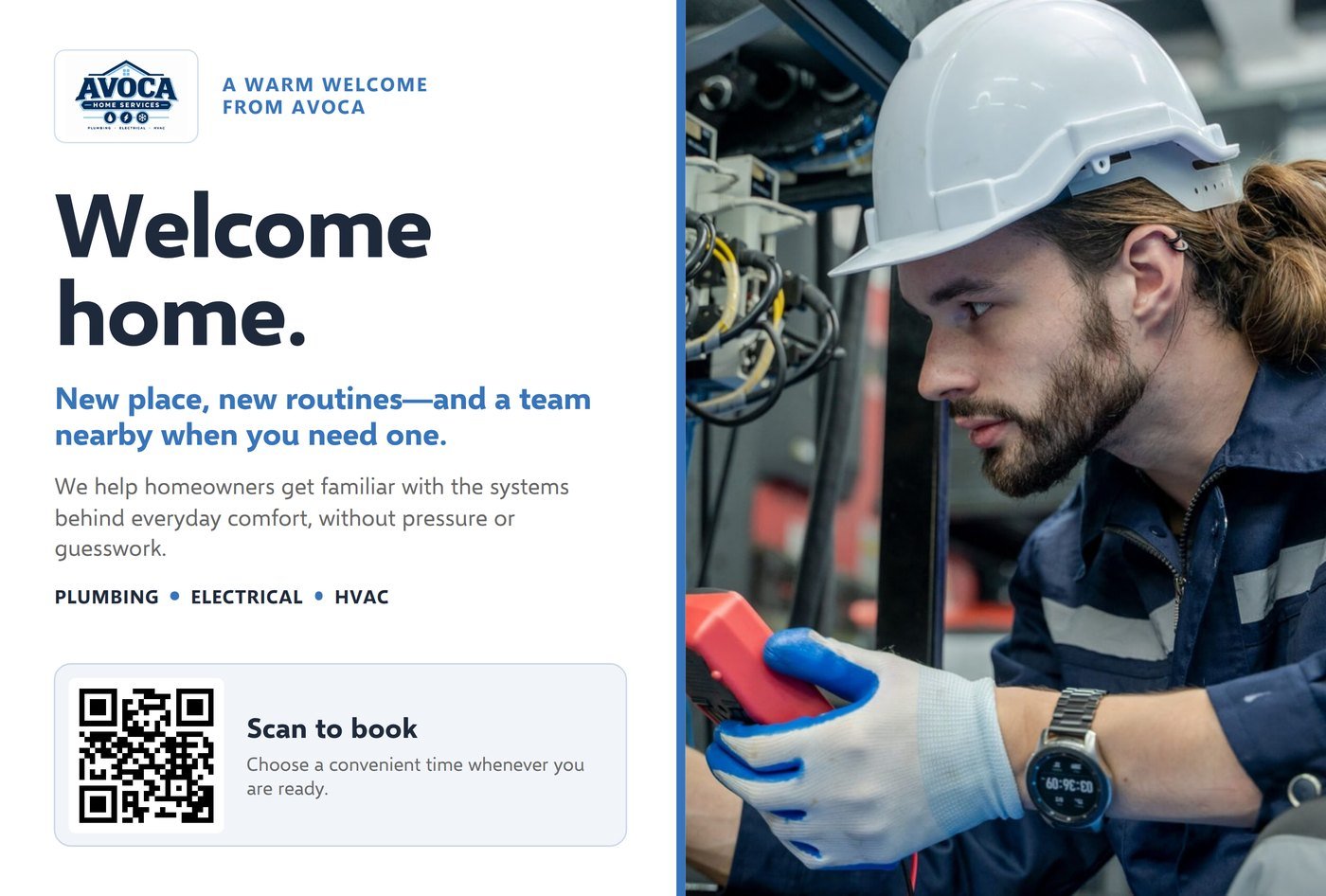
Front
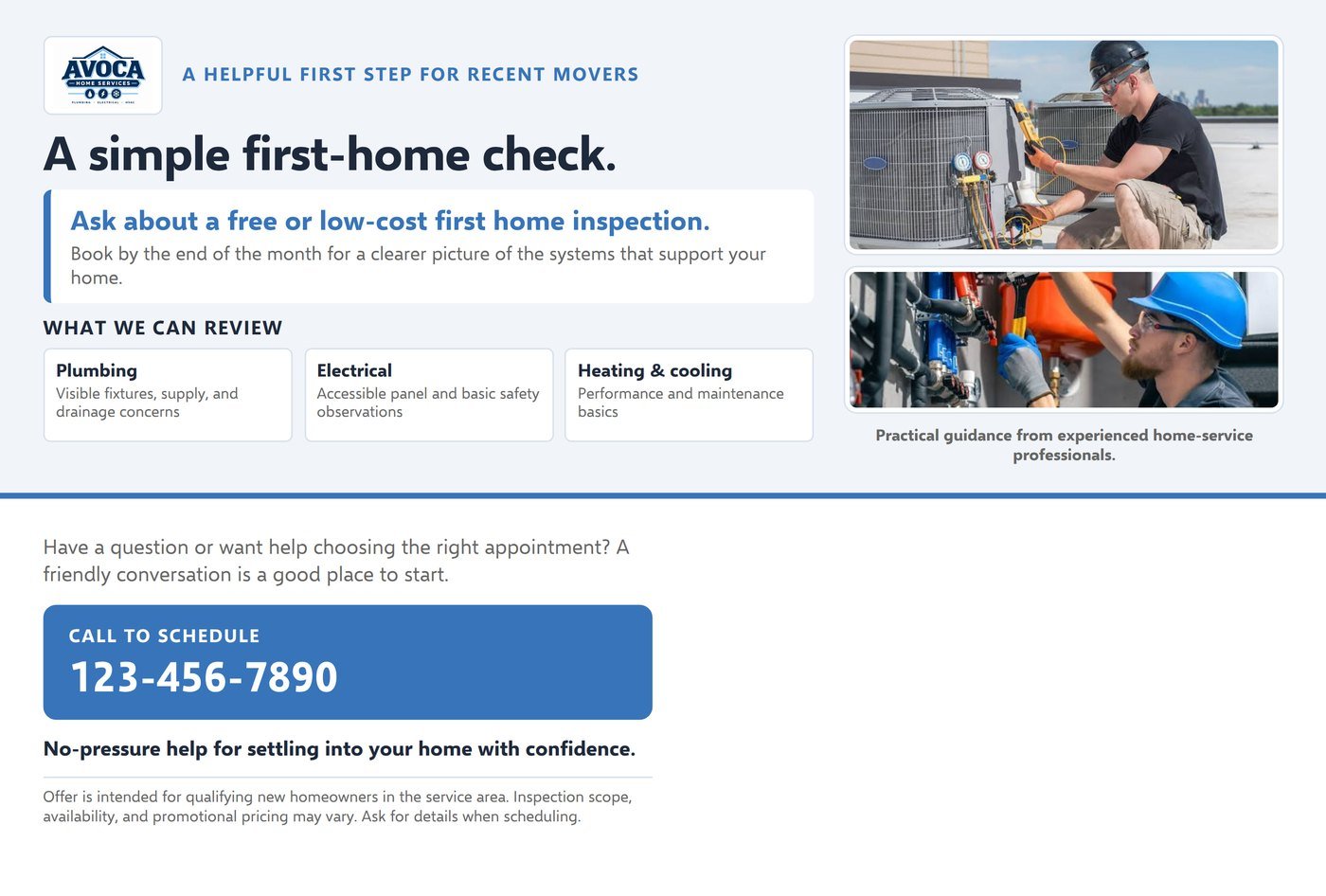
Back
- Offer: free or low-cost first home inspection, book by [date] (open-ended or 30 days from mail date, new movers respond on their own timeline)
- Seasonal hook: optional, lead with “settle in before [season]” only if move-in date lines up with an approaching season; otherwise skip urgency entirely and lean on welcome framing
- Audience: New homeowners in your service area who moved in within the last 30-60 days. Upload a list of new movers each month. When you build the campaign, choose Customers & leads already in Avoca to find the upload option, even though these homeowners aren’t customers yet.
- Front/back split: front hero’s a welcome message and the booking CTA, not a hard offer; back carries the offer details and what the inspection covers
- Styling: warm, residential imagery (a friendly house or neighborhood photo, not equipment), soft color palette, feels like a welcome card more than an ad
- Tone: warm, welcoming, low pressure
- Sequence: 3-6 touches over the first 60-90 days
- CTA: call [phone] or book online at [link/QR]
General prospect mailer (use sparingly)
Why it works: Older homes with moderate-to-high value are statistically more likely to need a breakdown repair or a full system replacement soon, so this filter finds genuine need instead of mailing at random. This campaign type is the lowest-ROI option in this guide; use the targeting above to keep it tight, and prefer the cross-sell and automated radius campaigns whenever the data to run them exists. When to mail: Only use this when neither a cross-sell audience nor a radius anchor is available. Keep the list tight using the criteria below rather than mailing a wide, generic area.
Front
Back
- Offer: a strong, highly enticing coupon or discount, book by [date] (3-4 weeks out); a weak offer will not move a cold prospect
- Seasonal hook: tie to the nearest seasonal risk or maintenance window if one applies
- Audience: Middle-aged to older homes, $300k-$800k home value, owner-occupied (not rented), [region]; keep the list to a few hundred rather than thousands, consider EDDM only if broad coverage is genuinely required. In Avoca, use Property Search with Year built, Home value and Owner-occupied.
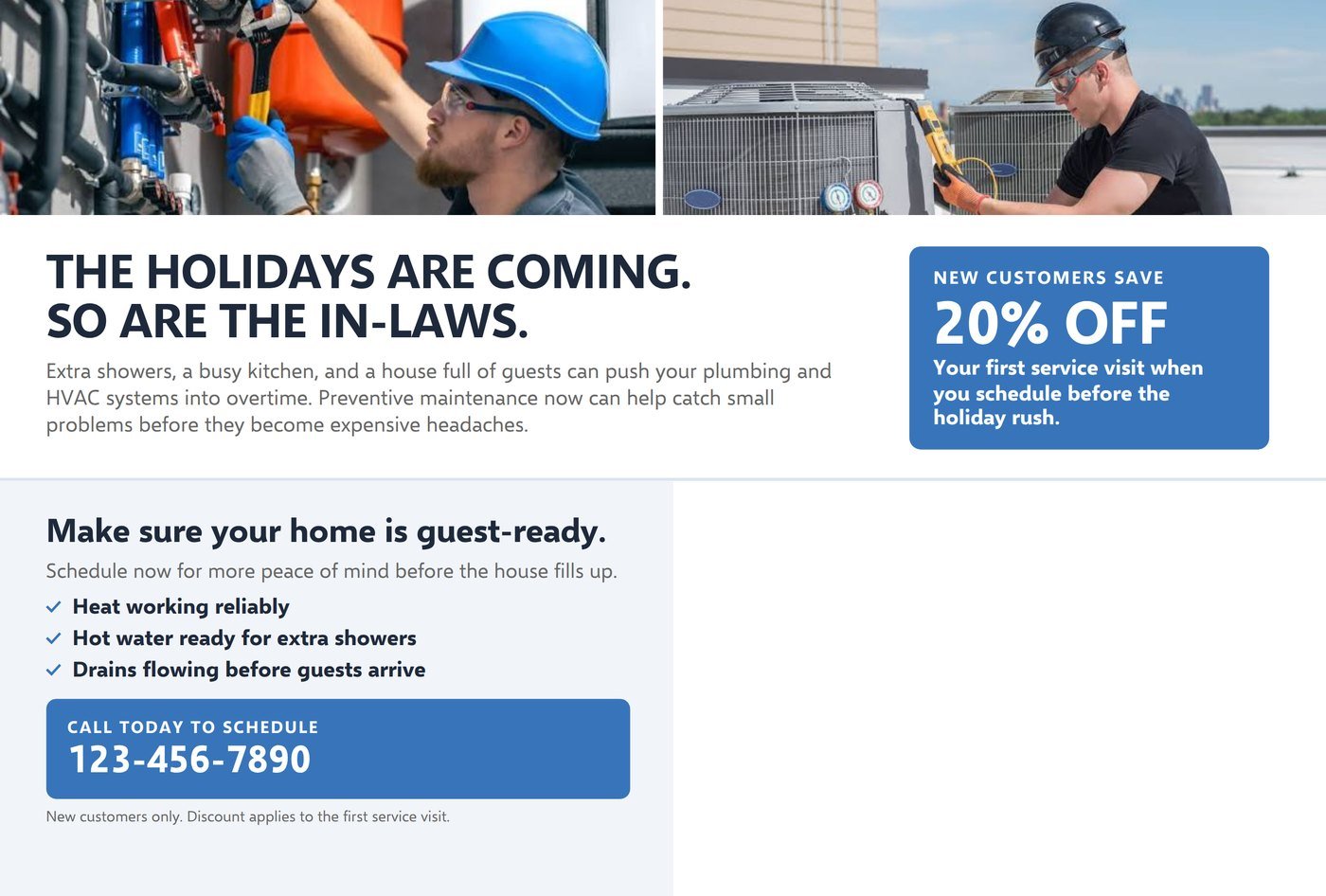
- Front/back split: front hero’s the coupon value and deadline; back explains the offer and why now (age of home, risk of breakdown) and gives the CTA
- Styling: bold offer, simple layout, real imagery over stock photos
- Tone: direct, offer-forward
- Sequence: 3-6 touches per household
- CTA: call [phone] or scan QR code to book